Audit, price, mock, build — then write down why.
Four concepts in two days, each taken from an open‑ended idea to a usable prototype. Every decision is recorded in the design notes on each screen — press N.
- 01
Audit the product, not the brand book
OpenSea's public brand page stops at a logo and a legacy palette the live product no longer uses. So I measured opensea.io itself — CSS variables from the stylesheet, component anatomy from the DOM, layout at desktop and phone widths — and wrote it up as a 15‑section spec another team could build from.
15‑section OS2 brand & UI specTokens as RGB triplets + a Tailwind v4 themeDo / Don't list derived from observed behaviourSee the living system - 02
Price the idea before drawing it
Each concept has a partner and a take. The business model shapes the screens: when the revenue is a fee, the fee box is the hero; when the risk is being classified as gambling, the credit‑default buyback toggle ships on day one.
Partnership economics: routes, states, integration surfaceBase case ≈ $32M across four lines, with sensitivitiesCompliance treated as product requirement, not legal noteThe economics table - 03
Mock the surfaces on the real shell
Sixteen artboards: a marketing page, the in‑app screens and the compliance‑critical states for each concept, plus the cross‑vertical home. Drawn on the real OS2 chrome so every decision met the constraints that would actually apply.
Packs canvas · 5 artboards + business one‑pagerPartnerships canvas · 10 artboardsPack artwork system (crimped booster, tier foil)Browse the artboards - 04
Build the prototype so the logic is real
One state model: a single USDC balance that margin, packs and positions all draw from, a simulated tape, and fee math shared between marketing pages and tickets so no number is typed twice. Forty‑plus routes, every edge state, mobile‑first.
Reducer state model persisted per browserShared fee math across all three partnersDeterministic seeds so server and client agreeOpen the prototype
The economics
Take per dollar routed and reachable volume move in opposite directions across the partners. Perps are a volume business at a near‑zero rate, prediction markets are the best blend, and gacha is a high‑rate business with a small pool that matters as the on‑ramp to graded cards. Illustrative, not a forecast.
One designer, one agent, two days.
The agent measured the site, drafted the spec, generated artboards and wrote code. I set the brief, made the product calls — the 99% EV, beating the category's 90% floor, the tier ladder, real slab photography — reviewed every screen against the system, and sent back what was wrong. Cheap first drafts move the work to deciding what the draft should be.
The artboards
Sixteen mockups from the two design canvases, before any of them became code.
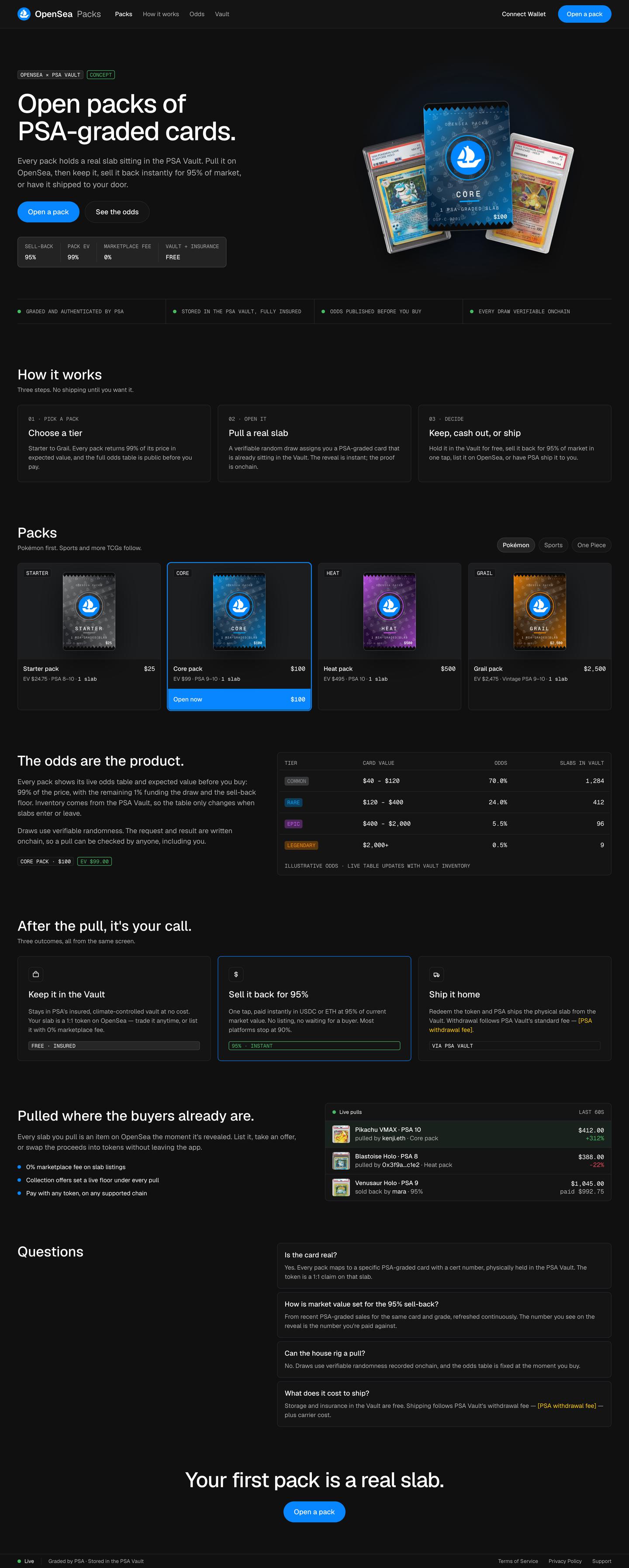 Full page ↗Packs · landingOpenSea × PSA Vault
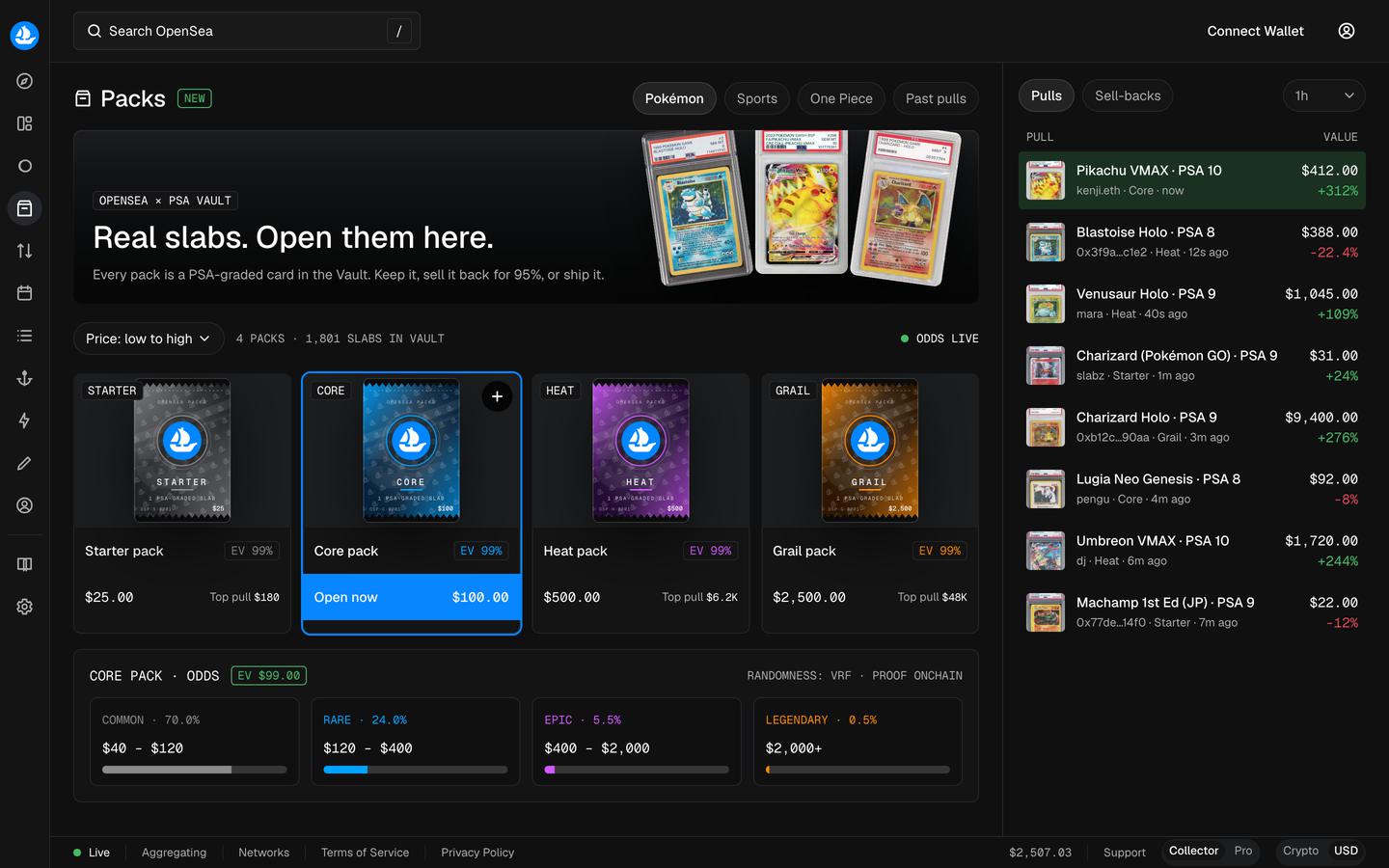 Packs · catalogueFour tiers on the OS2 shell
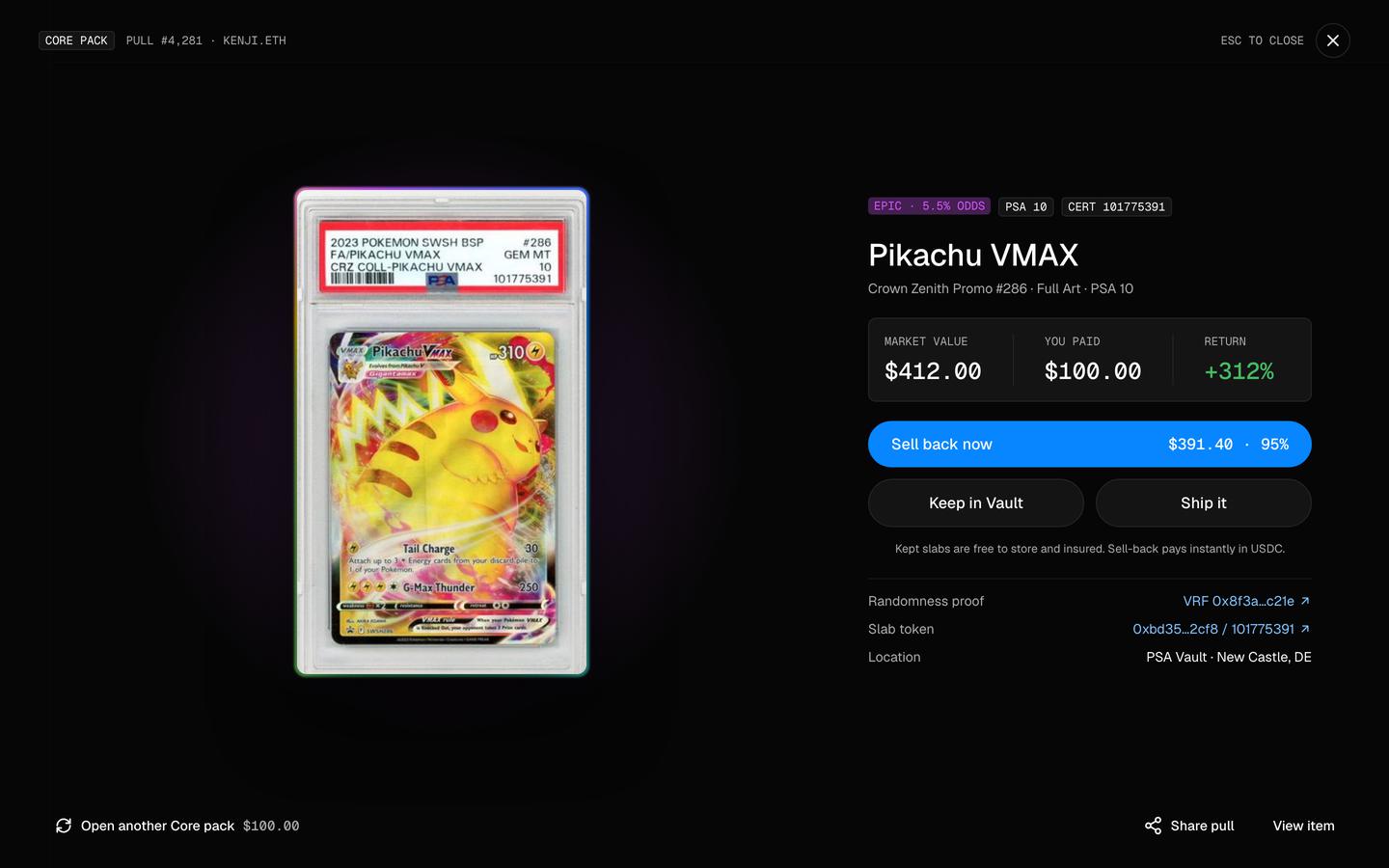 Packs · revealTear, slab, three outcomes
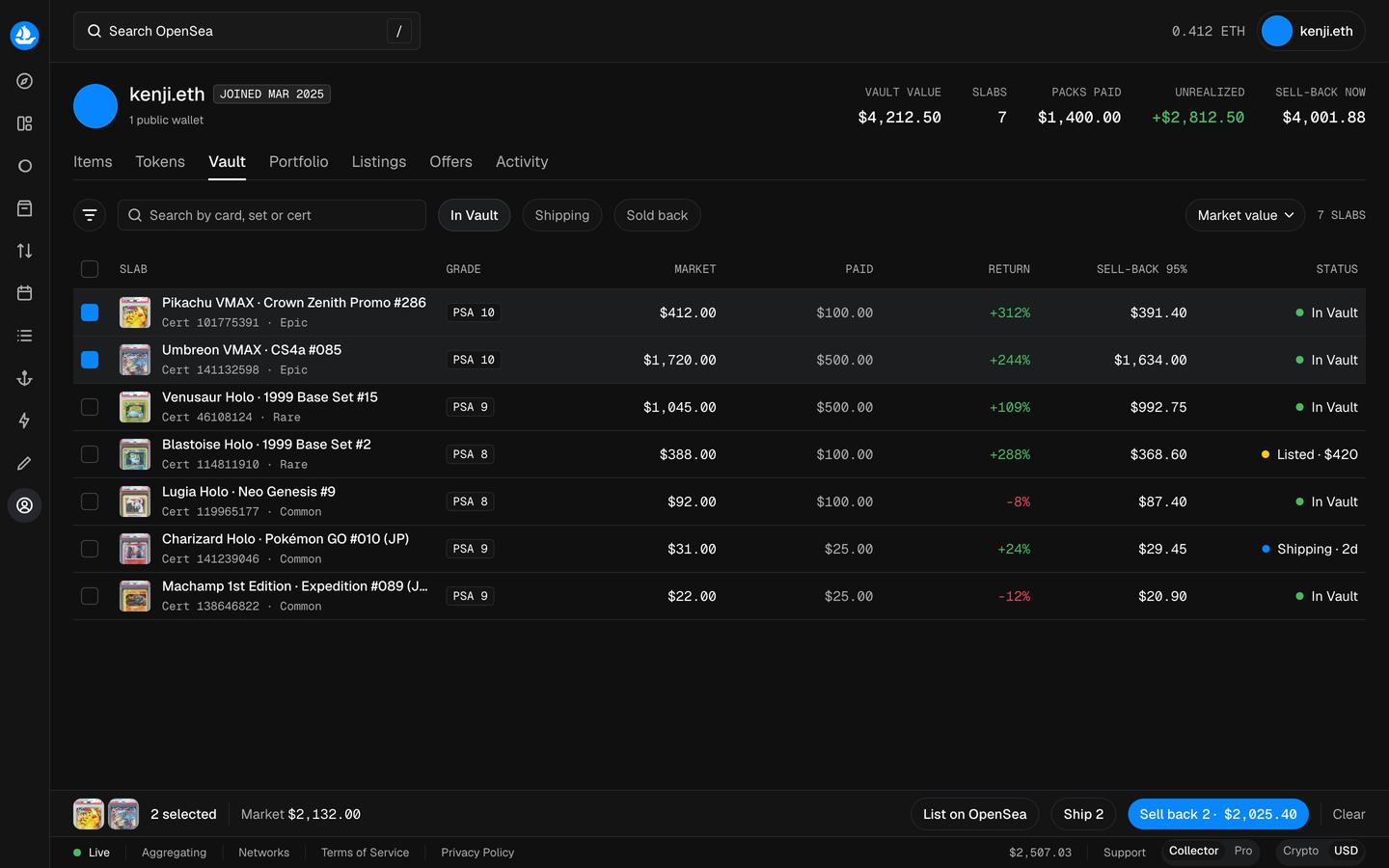 Packs · vaultHoldings, listing, sell‑back
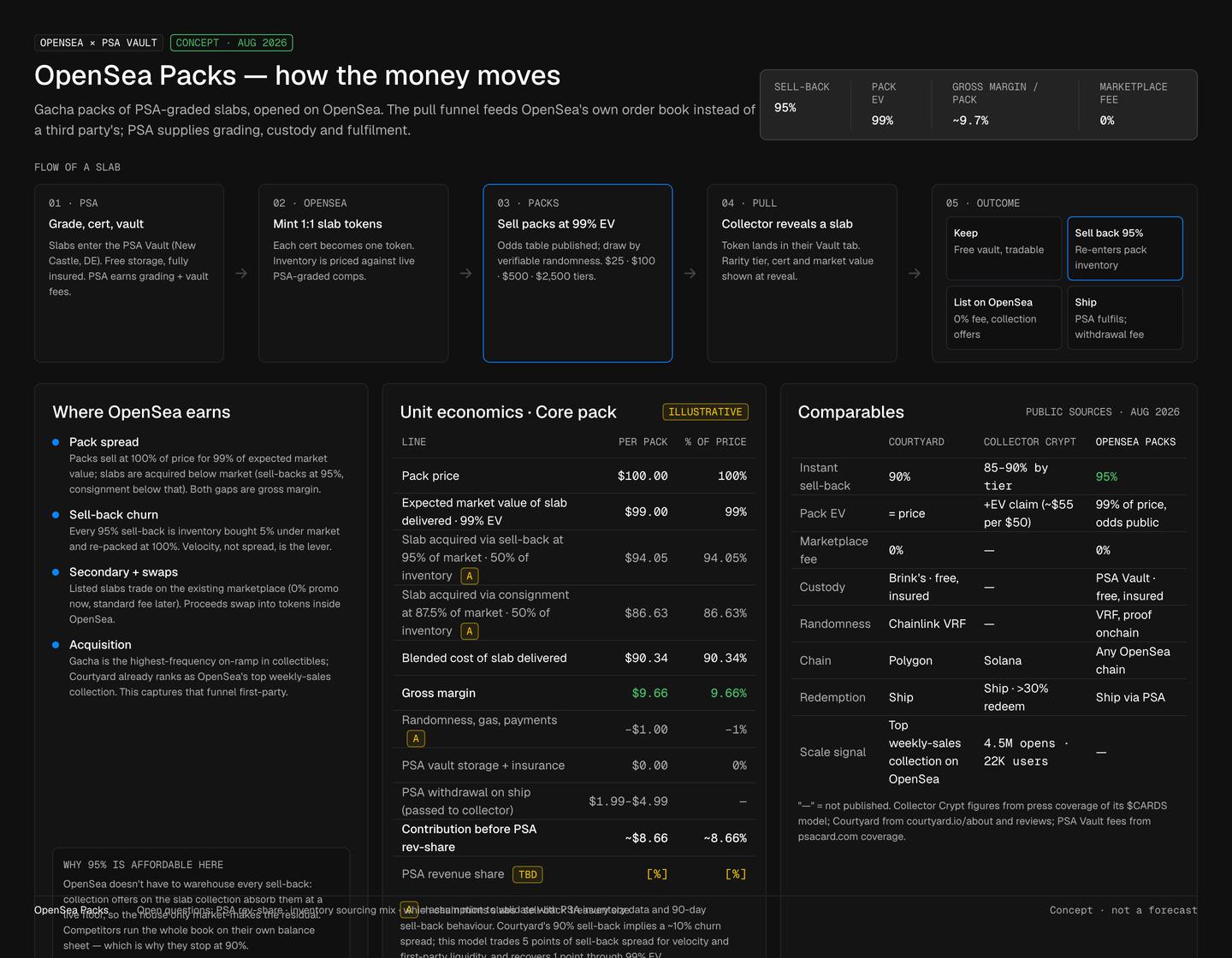 Packs · one‑pagerUnit economics
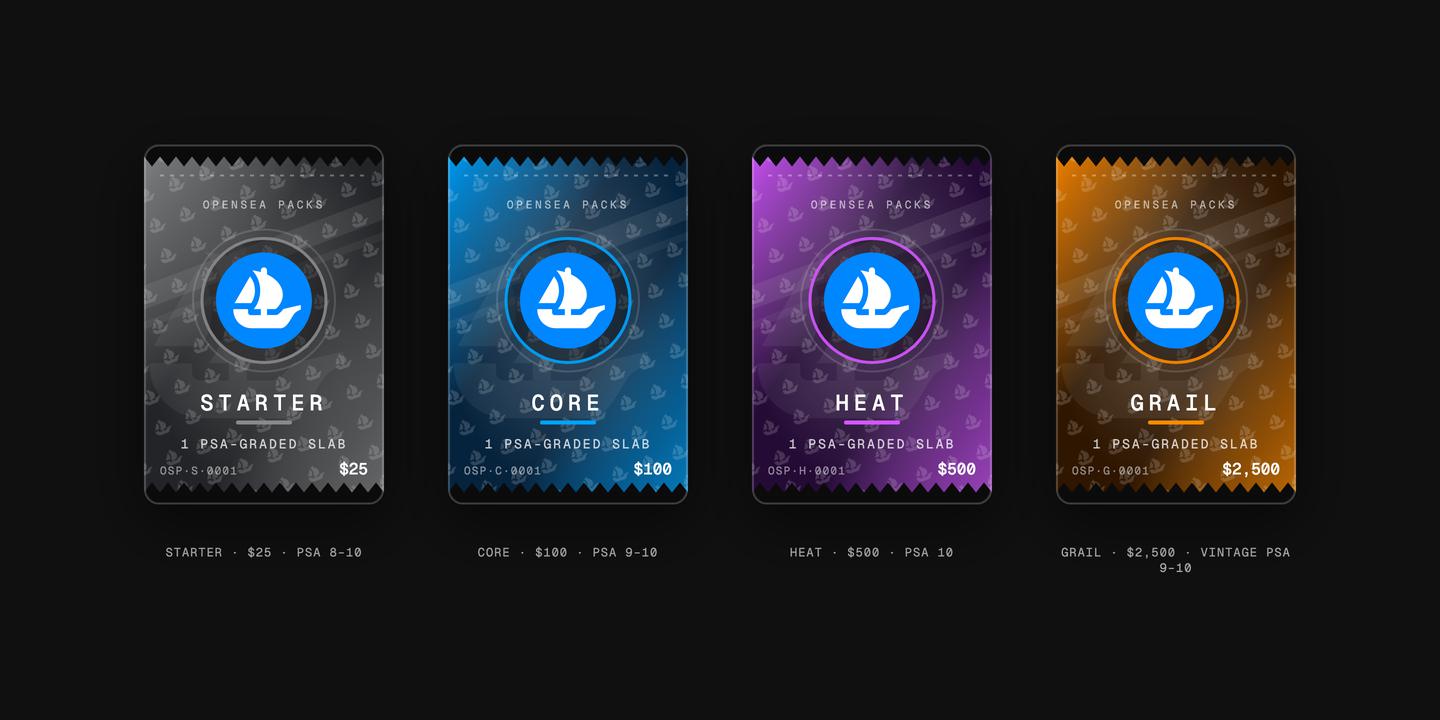 Pack artworkCrimped booster, tier foil
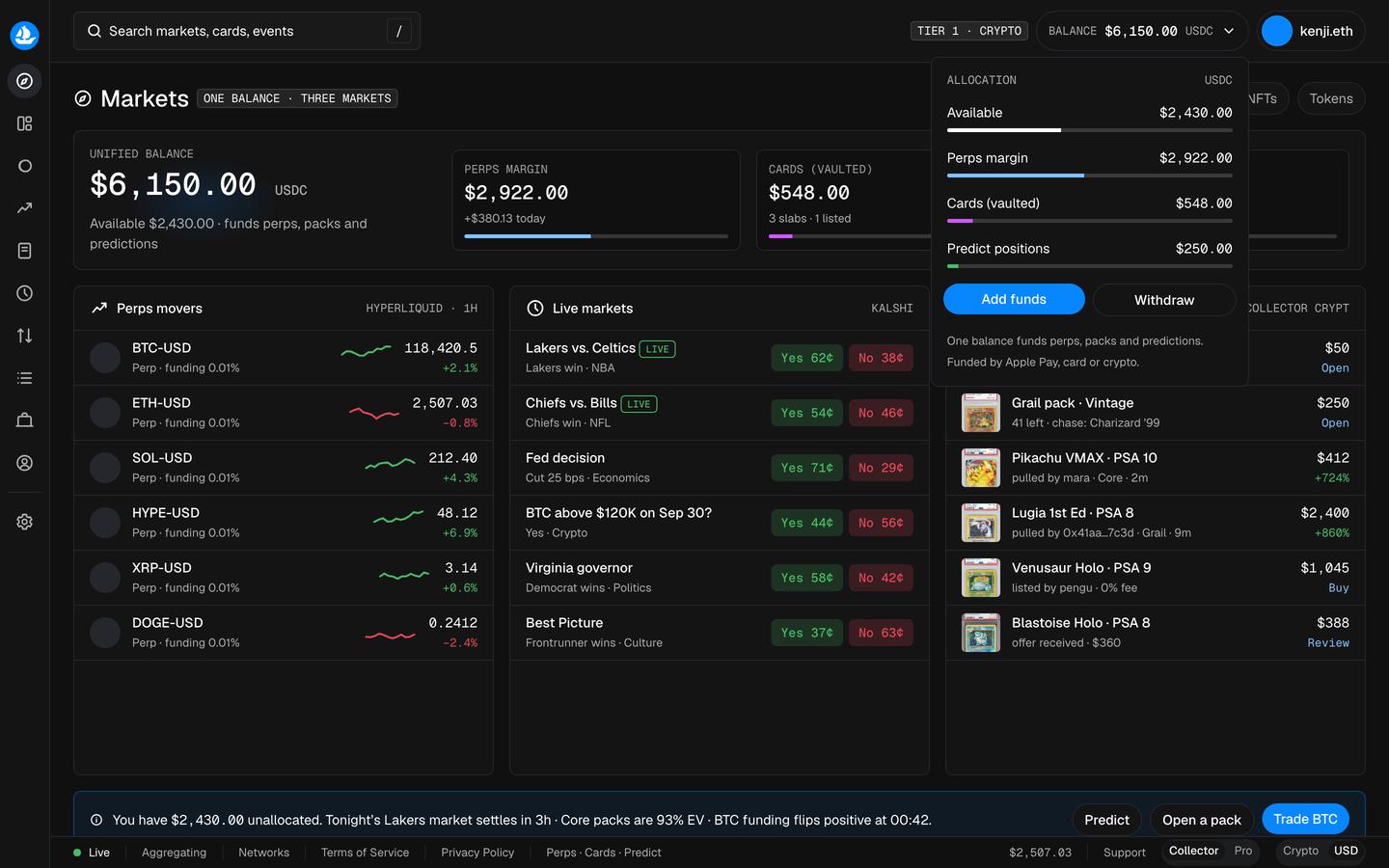 Markets homeThe unified balance, open
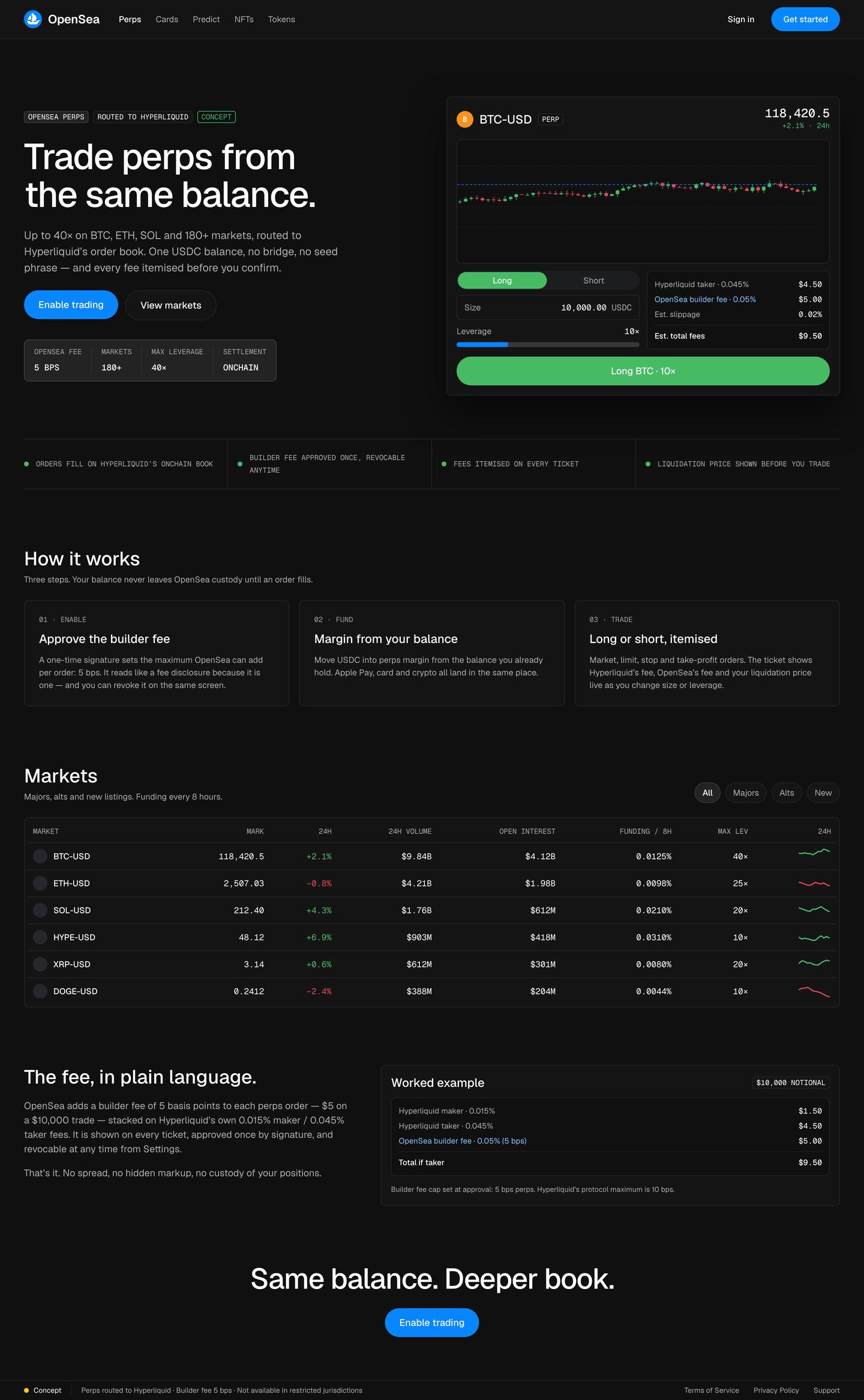 Full page ↗Perps · landingRouted to Hyperliquid
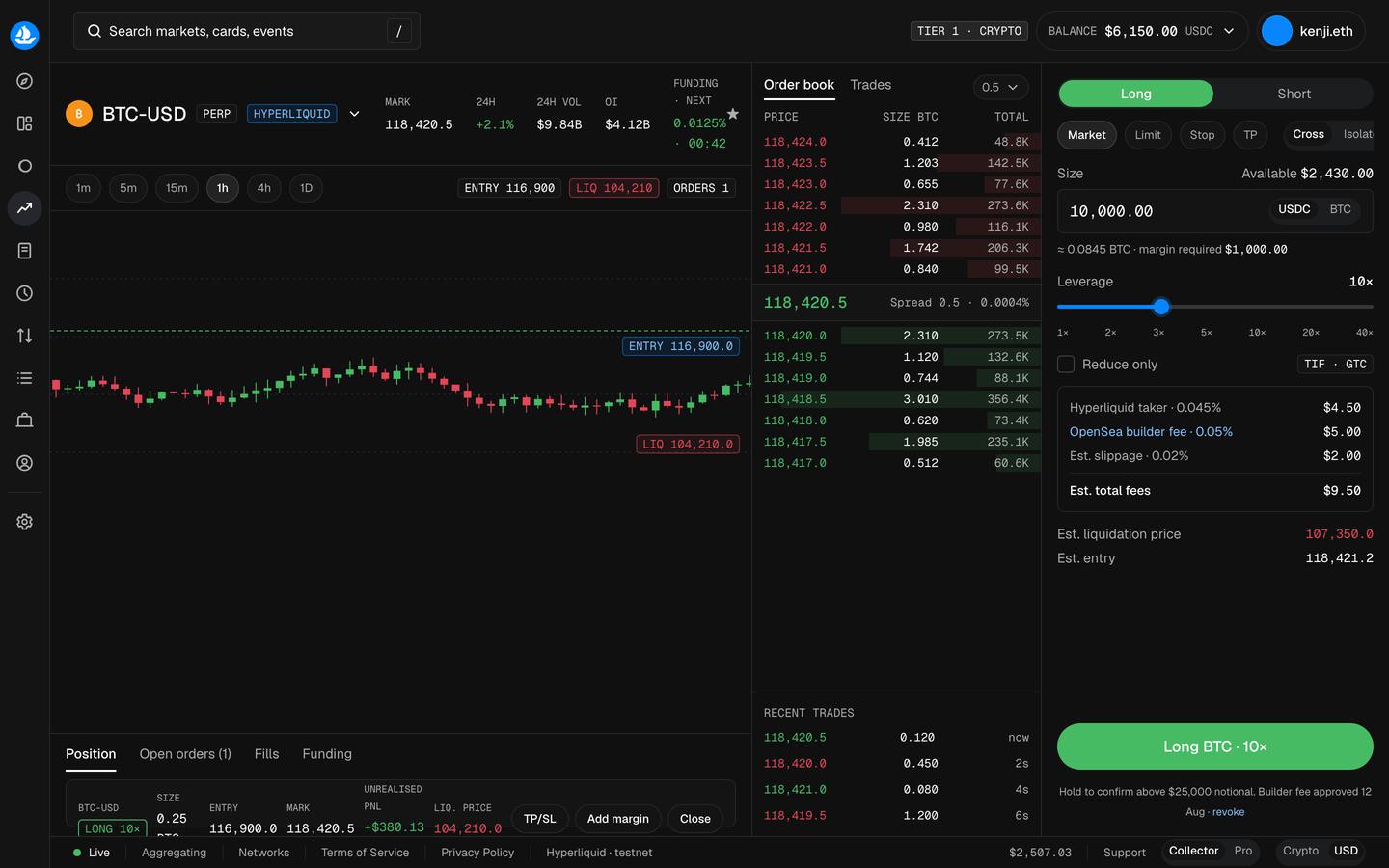 Perps · marketChart, book, itemised fees
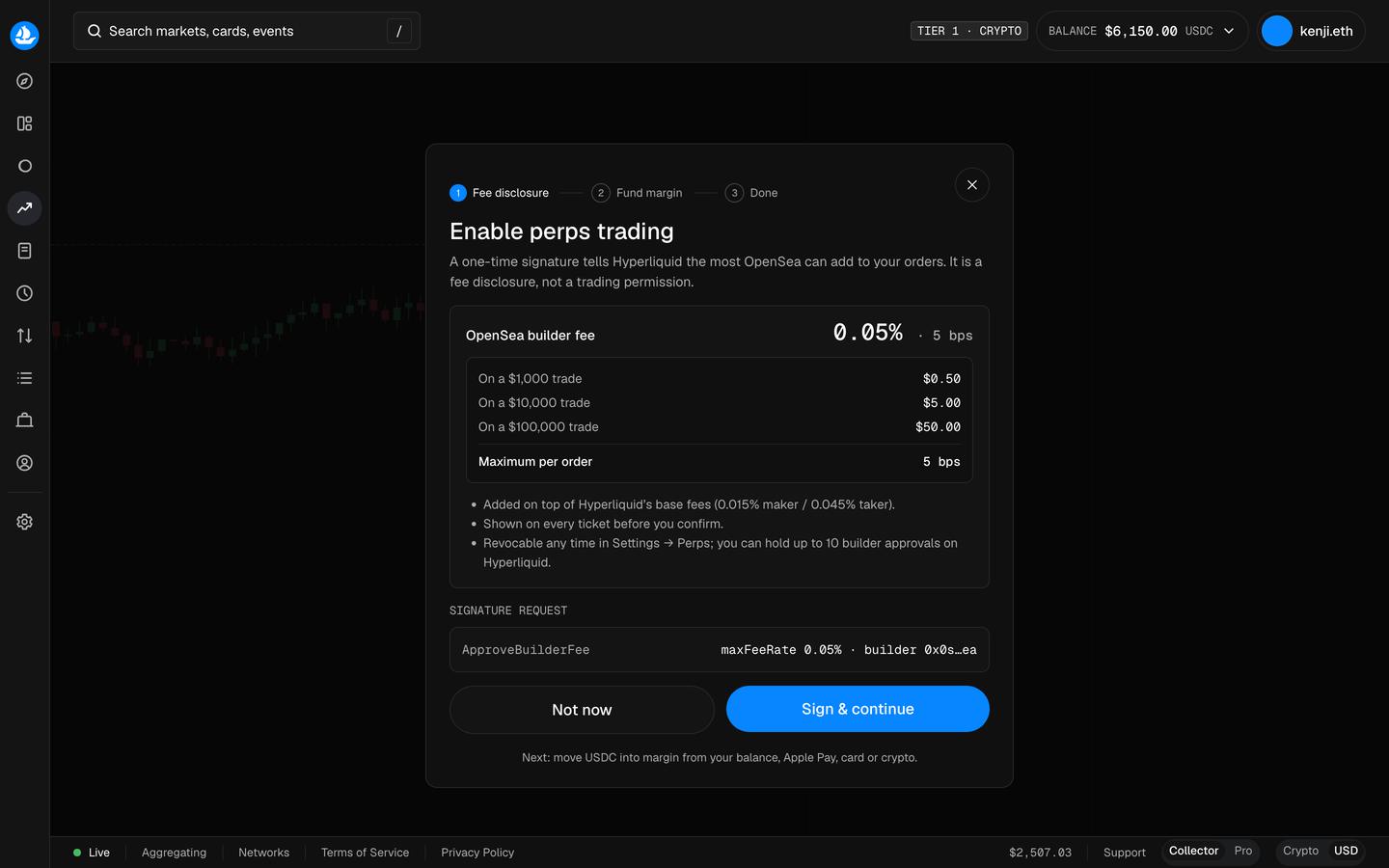 Perps · fee disclosureApproveBuilderFee
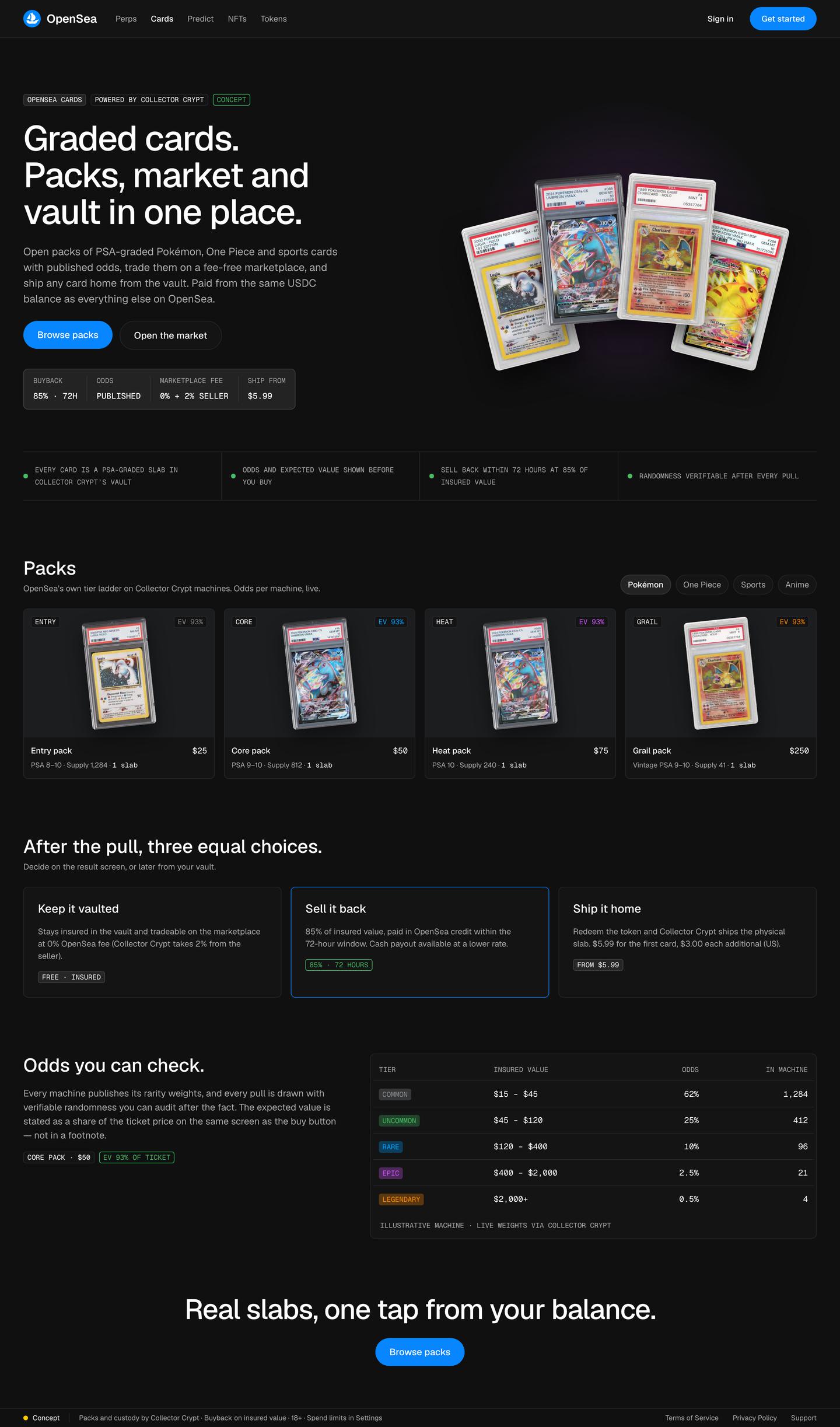 Full page ↗Cards · landingPowered by Collector Crypt
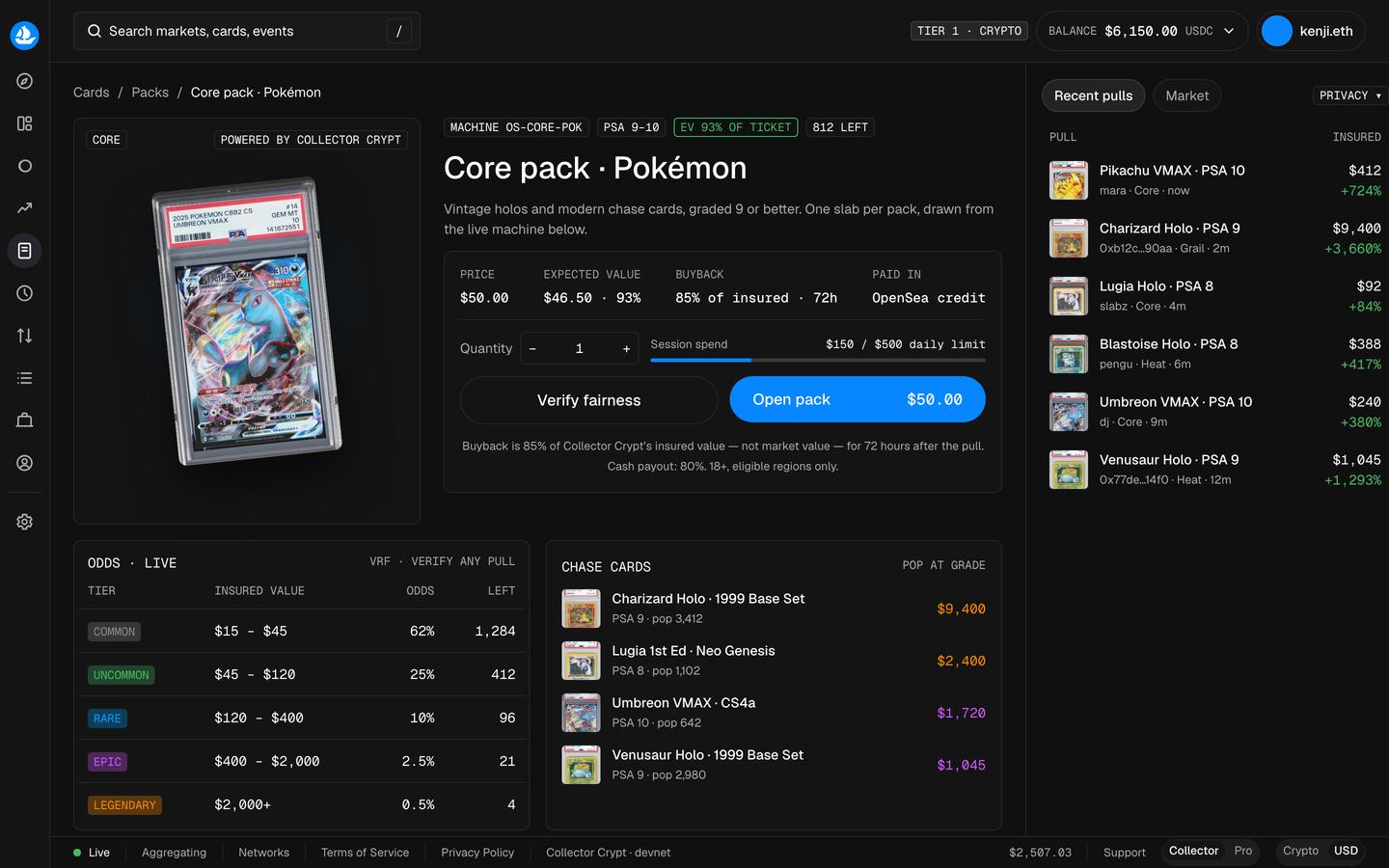 Cards · pack detailOdds beside the buy button
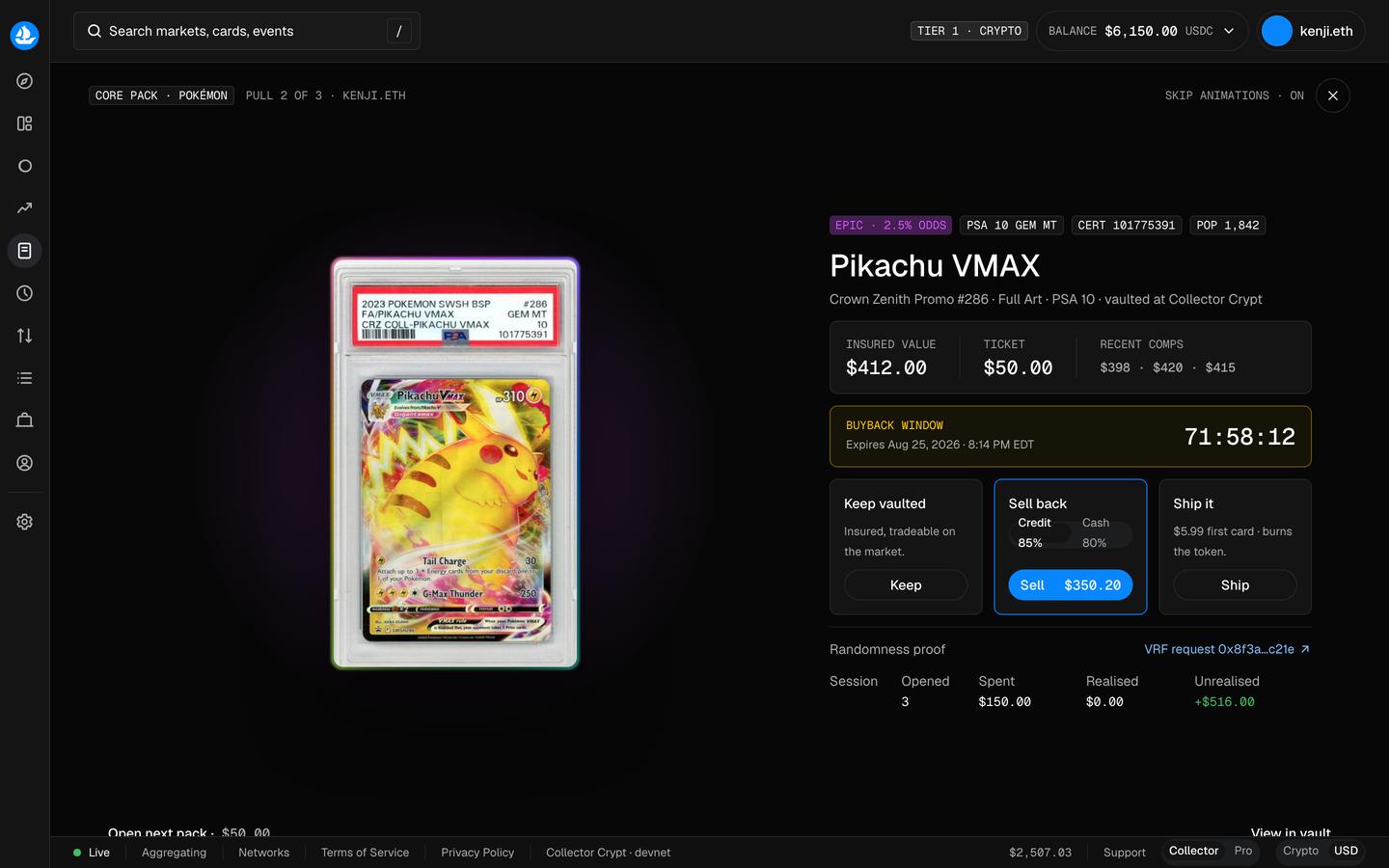 Cards · result72‑hour buyback countdown
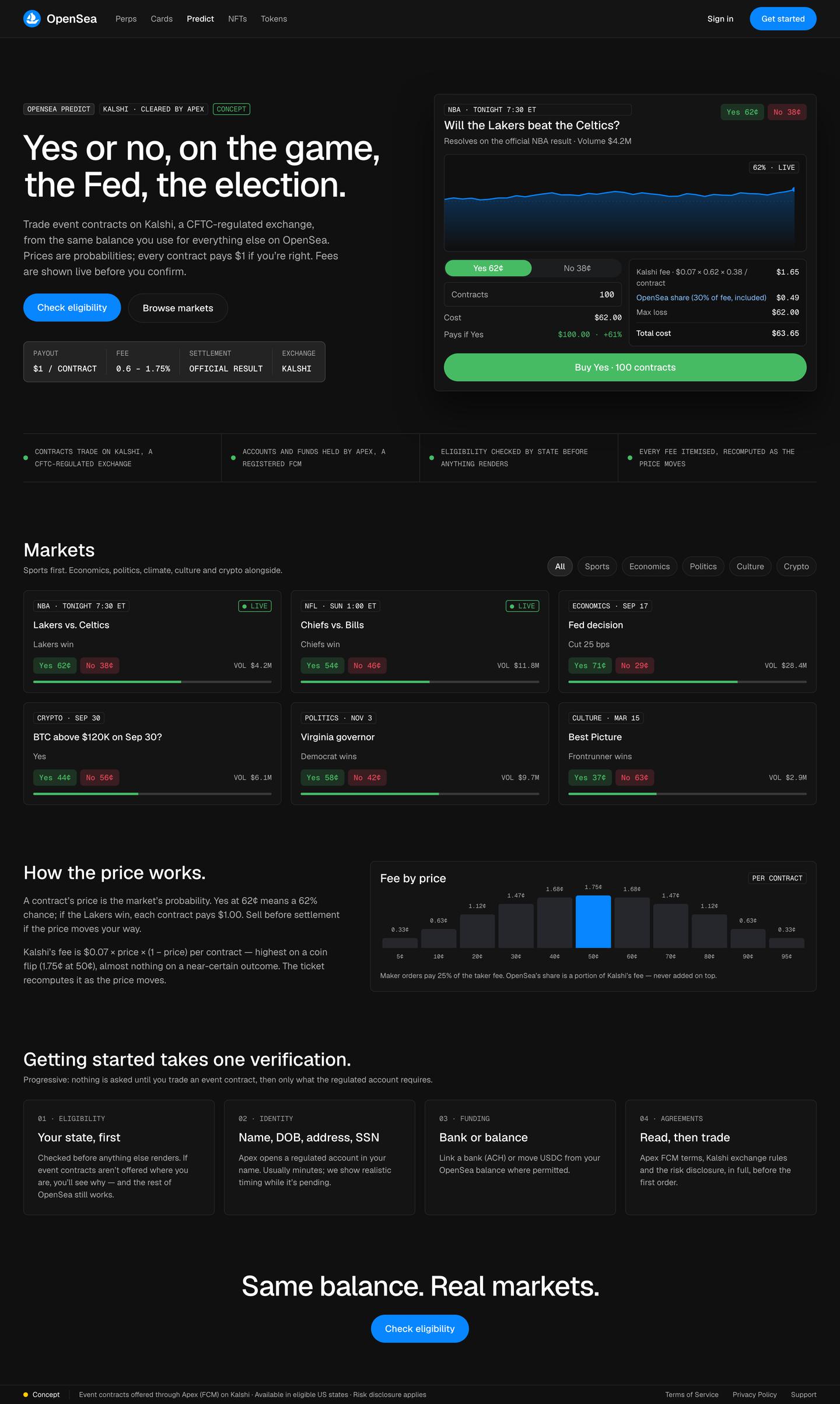 Full page ↗Predict · landingKalshi, cleared by Apex
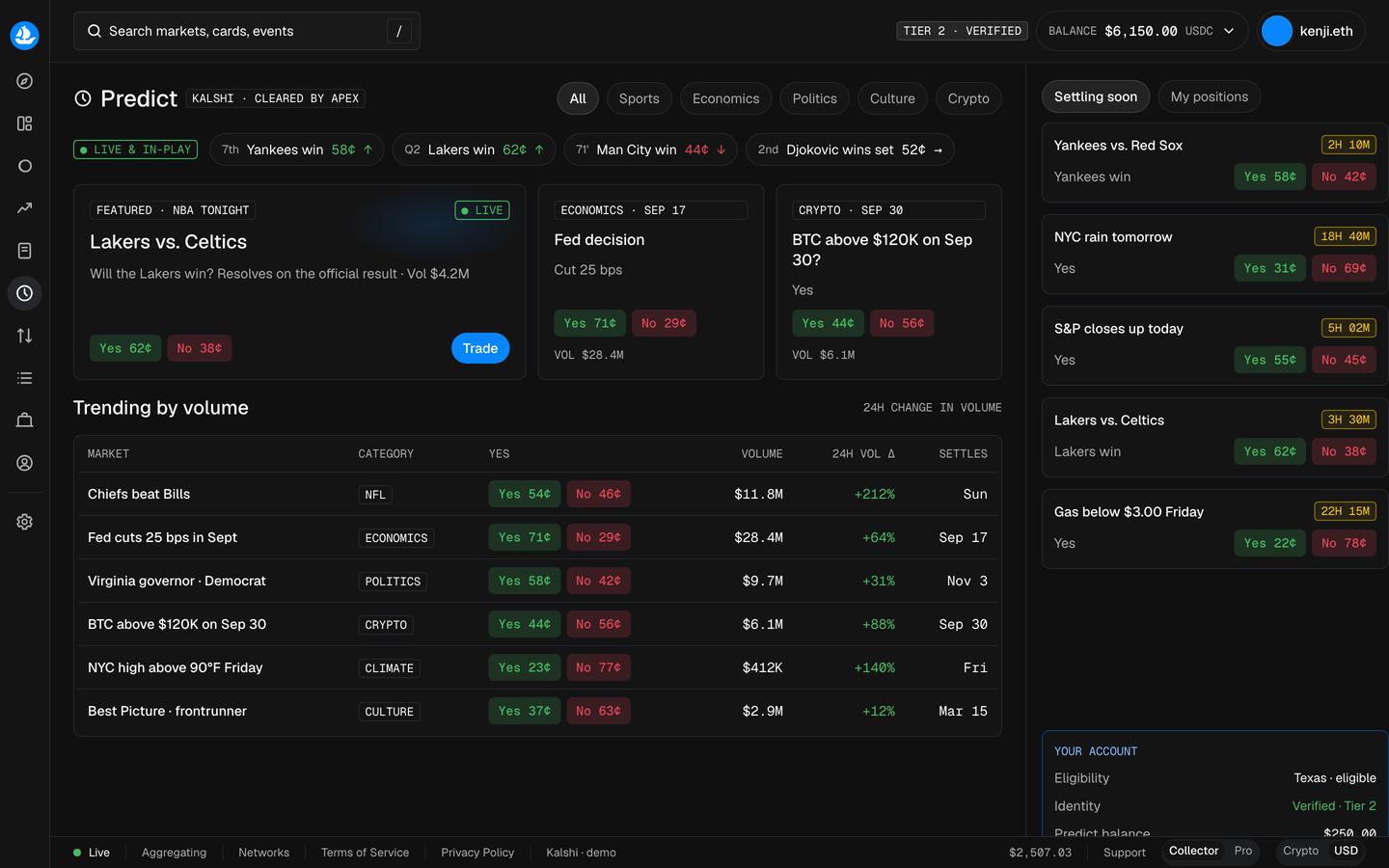 Predict · homeSports‑forward, live rail
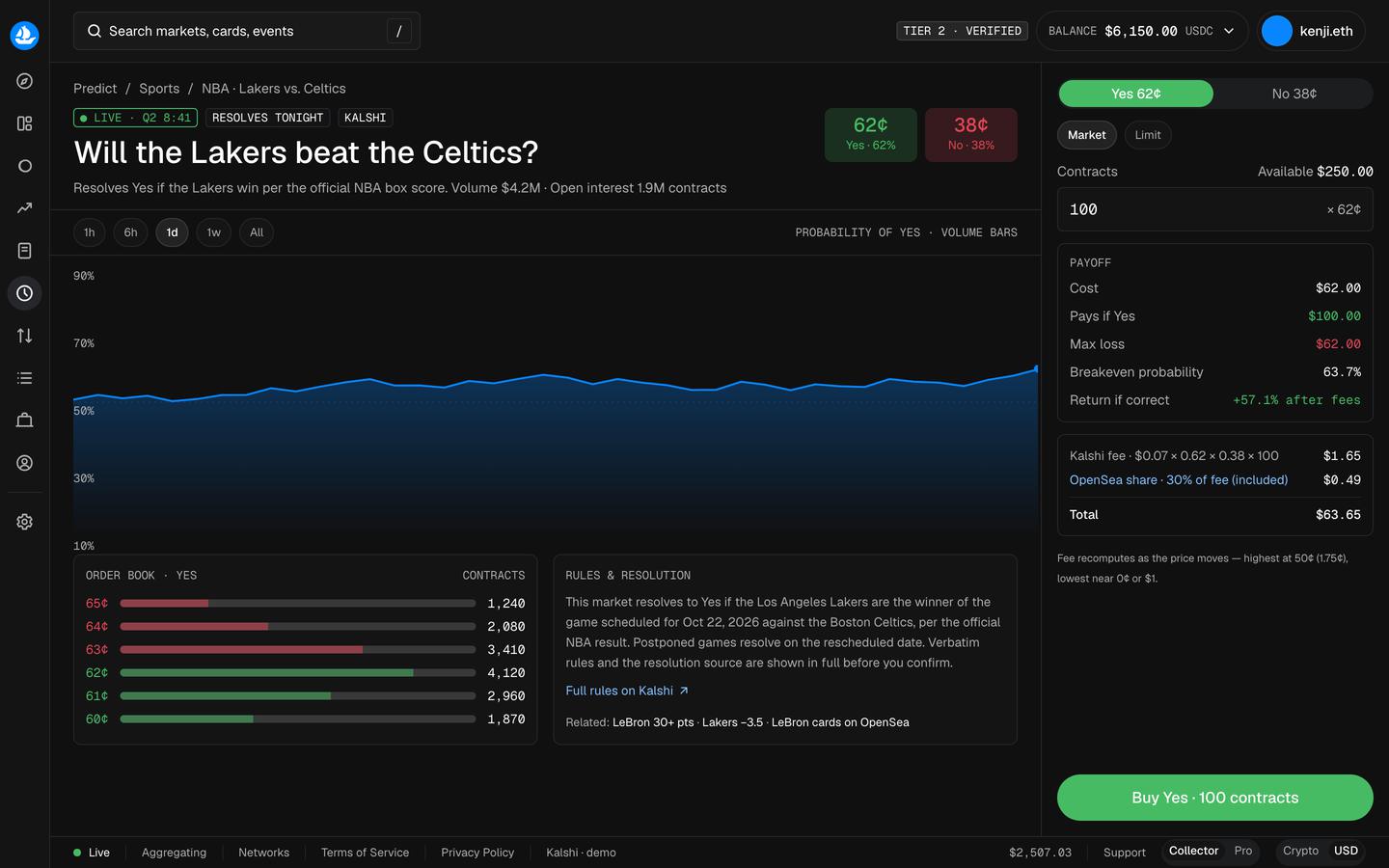 Predict · marketPayoff and fee, live
What I'd do next
A concept is a hypothesis with a prototype attached.